Research Interests
This page introduces the biological phenomena and evolutionary processes at the core of our research. Each theme is described separately here, but many of our projects sit at the intersection of several of them.
Evolutionary innovations
The trapping leaves of carnivorous plants evolved from ordinary photosynthetic leaves. Despite being leaves, they can attract and capture small insects and digest and absorb nutrients much like an animal gut. Such highly elaborate and seemingly improbable traits are nevertheless products of evolution. Their apparent improbability suggests that important evolutionary mechanisms still remain to be discovered. By studying evolutionary innovations, we aim to push the boundaries of biology.
Convergent evolution
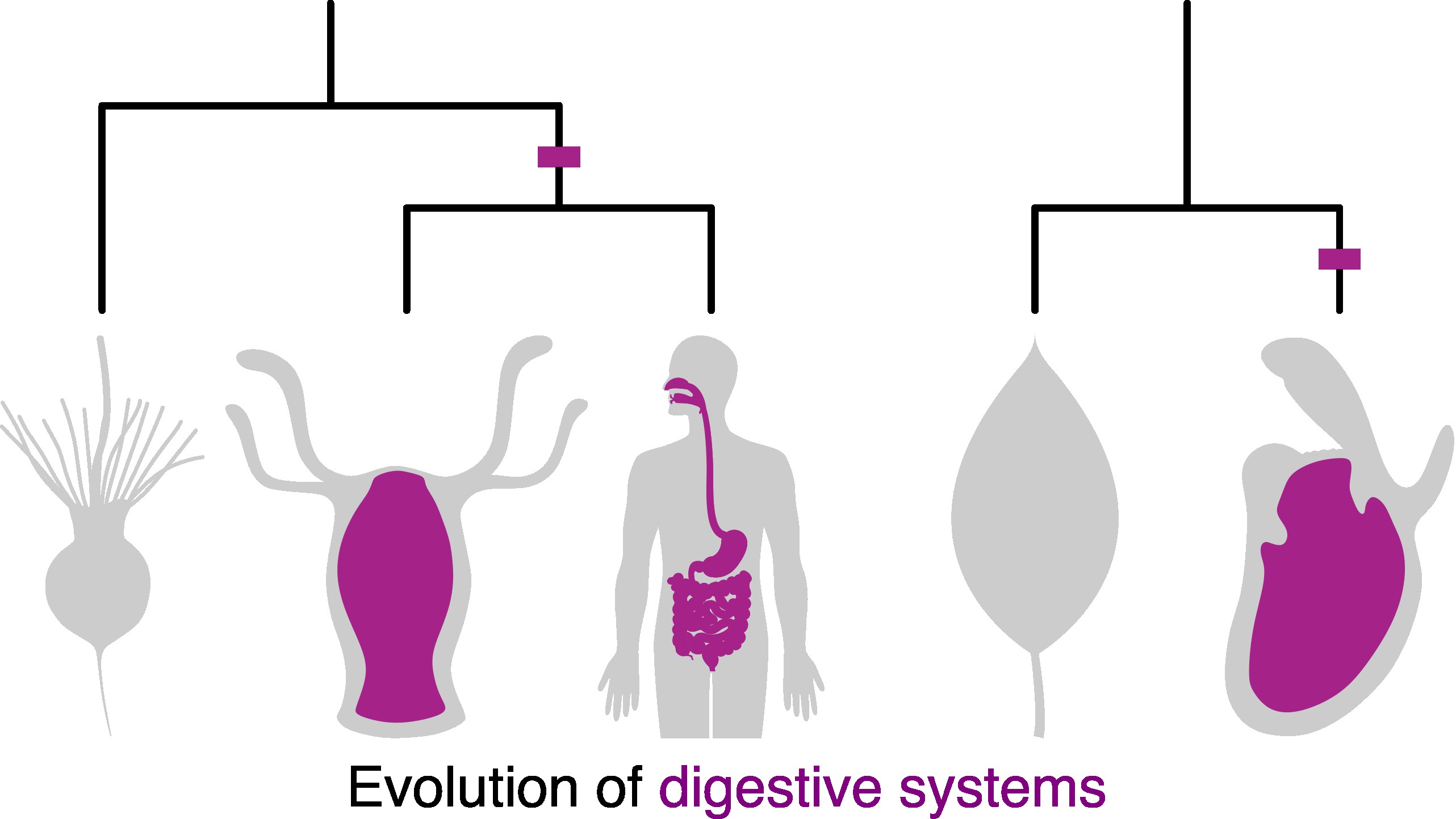
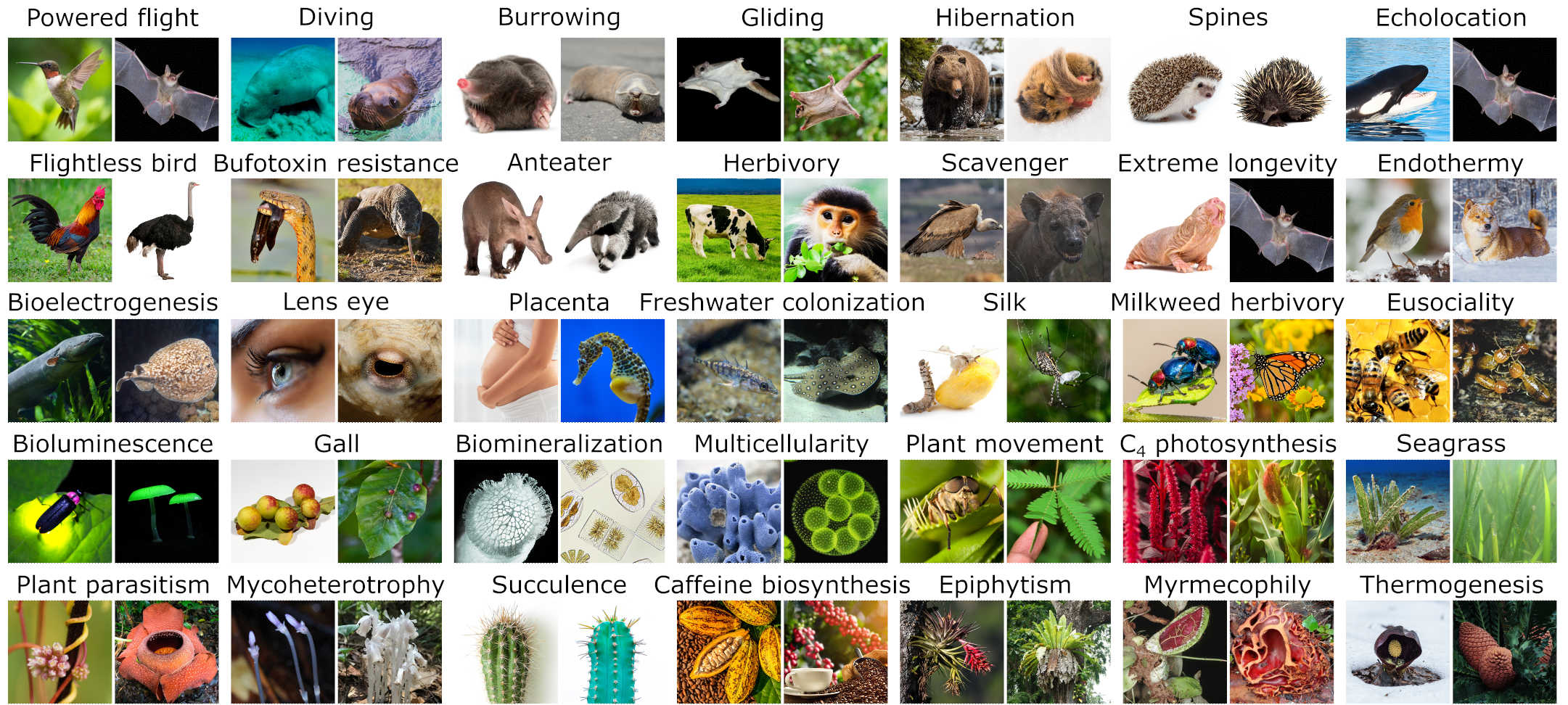
“History repeats itself” is a useful metaphor for evolution. Organisms that evolved independently can sometimes acquire similar traits. This phenomenon, known as convergent evolution, is a widespread pattern across the tree of life. Powered flight in birds and bats, and diving ability in dolphins, dugongs, and platypuses, are familiar examples. Carnivory in plants is another: it has evolved independently in roughly ten lineages.
Convergent evolution is not limited to form and function. When we examine convergent traits in detail, we sometimes find that the same genes changed in similar ways. This molecular-scale recurrence is known as molecular convergence. Under what conditions does evolution repeat itself? We think molecular convergence provides an important clue.
Phenotypic plasticity
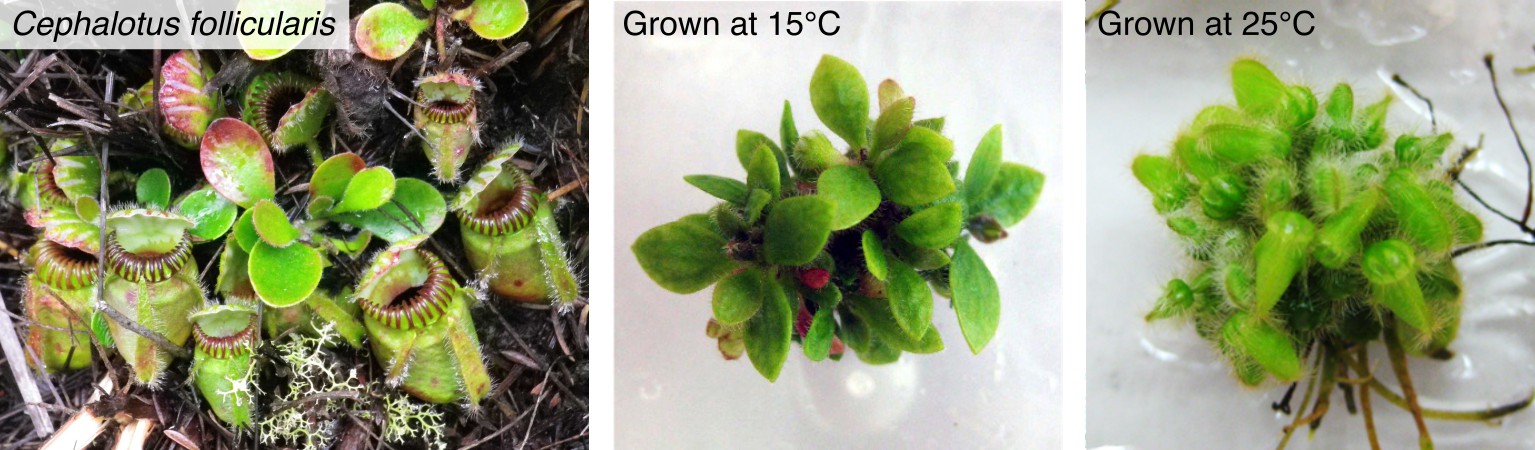
Organisms can alter their body plans in response to the environment. When those changes are especially pronounced, the phenomenon is called phenotypic plasticity. Some carnivorous plants show this plasticity by producing both trapping leaves and photosynthetic leaves. Because trapping leaves always evolved from photosynthetic leaves, this plasticity may preserve clues to how carnivorous leaves originated. We are tackling this question using the Australian pitcher plant Cephalotus follicularis.
Drastic morphological evolution
When people think of evolution, they often imagine gradual, continuous change. But some forms seem to appear abruptly, with no obvious intermediates. Pitcher-shaped trapping leaves in carnivorous plants are a good example. We think the key to this apparent leap lies in development, the process by which organs take shape.
Cell type evolution
Organisms are assemblies of cells, and the evolution of body form can ultimately be understood as the evolution of cell types. Carnivorous plants possess many specialized cell types that are absent from other plants. How did these novel cells arise during the evolution of carnivory?
Co-option
Evolution rarely invents complex new functions from scratch. It is often more effective to reuse existing components in new contexts. When genes that originally served one trait are co-opted for another, an apparently sudden innovation can emerge. We previously showed that digestive enzymes in carnivorous plants evolved from enzymes involved in pathogen defense, and we continue to investigate other unexpected cases of co-option.
Gene duplication and whole-genome duplication
New genes often appear in the background of trait evolution. Many of them arise through duplication of pre-existing genes, a process that is indispensable in evolution. We search genomes for traces of gene duplications that coincide with major trait innovations, and we ask how duplication interacts with other modes of molecular evolution.
Gene duplication does not always occur one gene at a time. Whole-genome duplication doubles tens of thousands of genes at once and is especially common in plants. By analyzing its timing and the interactions between subgenomes, we seek to understand its evolutionary significance.
Gene sequence evolution
DNA sequence determines amino-acid sequence, amino-acid sequence shapes protein structure, protein structure influences protein function, and protein function ultimately affects organismal traits through higher levels of biological organization. Even though many layers separate sequence from phenotype, a single amino-acid change can sometimes have direct consequences for survival. We search for the sequence changes that drove trait evolution.
Gene expression evolution
Gene function can evolve even when the encoded protein sequence does not change. Regulatory changes that alter when, where, or how strongly a gene is expressed can also reshape traits. We are especially interested in this process because it is closely tied to evolutionary co-option.
Gene loss
Evolution is not only about gaining something new. Losing genes is also an important component of evolutionary change. The emergence of new traits is often accompanied by the loss of specific genes. Gene loss is the counterpart of gene duplication, and its evolutionary significance can be just as great.
Genetic background
The same mutation does not always produce the same evolutionary outcome. Gene function depends on interactions with many other genes. When we focus on one locus, the collective influence of all the others is called genetic background. This is a key factor in convergent evolution. If genetic background has a strong effect, phenotypic convergence driven by the same molecular changes should be less likely; if its effect is weaker, such convergence should be more likely. We investigate these relationships.